
• Click to Call
  • Request a Site Assessment
Distribution X
  • Material Handling Installation Solutions
    • Automated System Installations
          • AS / RS
          • Rack-Supported Buildings
          • Mini Load Systems
          • Wire Guidance Installation
          • Stacker Cranes
          • Pallet Load Systems
          • Automated Pallet Shuttles
          • Learn More
          • Vertical Lift Modules
          • Vertical Reciprocating Conveyors
          • Mobile Racking
    • Mechanical Conveyor Installations
          • Powered Conveyor
          • Gravity Conveyor
          • Conveyor Sortation Systems
          • Chain Conveyor
          • Robotic Picking System
          • Accumulation Conveyor
          • Learn More
          • Activated Roller Belt
          • AGVs & AMRs
          • Vertical Spiral Conveyor
    • Pallet Rack & Steel Structure Installations
          • Selective Rack
          • Drive-In Rack / Drive-Thru Rack
          • Push-Back Rack
          • Cantilever Rack
          • Double Deep Rack
          • Pallet Flow Rack
          • Learn More
          • Carton Flow Rack
          • Pick Module Systems
          • Mezzanines
    • Safety & Compliance
          • Learn More
    • Teardown & Decomission
          • Learn More
  • Projects
  • About Us
    • Blog
    • Careers
  • Contact
  • Menu Menu

What Pick Module Installation Coordination Actually Requires

A pick module is the highest-complexity project most warehouses will ever install, and the reason has nothing to do with the racking or the conveyor individually. It’s the sequencing. Selective racking, conveyor lines, and pick-to-light or sortation zones all have to land in the same footprint, on overlapping timelines, without one trade blocking the next. Pick module installation done right means someone is sequencing three or four trades against each other from day one, not managing three separate projects that happen to share a floor.

Why Pick Module Installation Is a Sequencing Problem, Not a Trade List

A pick module isn’t selective racking with a conveyor bolted on. It’s a structure where the racking geometry, the conveyor path, and the picking zones are interdependent from the design stage forward.

Selective Racking Sets the Envelope Everything Else Fits Into

Bay spacing, upright placement, and level heights in the pick module racking structure determine where the conveyor path can physically run and where a picker can stand once product reaches the flow lane. If the racking geometry gets engineered without the conveyor and picking layout already in the drawings, you end up retrofitting one system around the other, which is where most cost overruns start. Good warehouse pick module design locks the racking, conveyor, and picking dimensions together before steel is ordered, not after.

Conveyor and Sortation Zones Aren’t an Add-On

Carton flow lanes, pallet flow positions, and sortation or pick-to-light zones aren’t equipment dropped into finished racking. They’re structural and spatial commitments that dictate aisle widths, beam heights, and where static shelving can and can’t go. Treating conveyor and sortation as a later phase instead of a parallel design input is how facilities end up with a picking aisle that’s technically installed but functionally too tight to work in.

What Happens When Conveyor Lead Time Outpaces Racking

This is where most pick module timelines actually break, and it rarely gets flagged until the project is already underway.

Why Conveyor Components Typically Take Longer to Arrive

Racking is largely stock steel with predictable manufacturing and delivery windows. Conveyor components, especially controls, motors, sortation hardware, and custom-fabricated transitions, often carry longer lead times because they’re built to the specific layout rather than pulled from standard inventory. Pick module conveyor integration usually surfaces this gap early, since the conveyor package is frequently the last piece confirmed but the first one with a lead time problem.

Sequencing Around a Lead Time Gap Instead of Around a Calendar

When conveyor arrives weeks after racking is ready, a contractor sequencing the job around a fixed calendar ends up with idle racking crews or a rushed conveyor install once components finally land. The better approach sequences racking completion around the conveyor’s confirmed delivery window from the start, staging racking work so the crew isn’t standing idle and isn’t forced to compress conveyor installation into less time than it needs.

How Floor Loading and Aisle Clearance Shift in a Pick Module

Combining static storage with active conveyor traffic changes structural and spatial requirements that a single-system installer wouldn’t necessarily account for.

Static Load vs. Active Conveyor Traffic

Racking alone puts static, predictable load on the floor slab. Add a conveyor system and you introduce dynamic load, vibration, and concentrated point loads at motor drives and transfer points, often in the same floor zone as the racking baseplates. A slab that was adequate for racking alone isn’t automatically adequate once conveyor traffic is layered on top of it, and that verification has to happen before installation, not after a crack shows up.

Aisle Clearance for Order Pickers, Not Just Forklifts

A multi-level system adds a second clearance requirement on top of standard forklift aisle spacing: the working clearance an order picker needs at each level, plus safe egress and sightlines around active conveyor lines. A layout that clears code for forklift traffic can still be too tight once you add a picker standing at a flow lane with a conveyor running behind them.

SKU Velocity and Pick Rate Change the Layout Math

High-velocity picking zones move product through the flow lane far faster than low-velocity storage positions, and that throughput difference changes how much aisle and staging space each zone actually needs. A pick module designed around average throughput instead of peak picking rate tends to bottleneck at exactly the SKUs generating the most volume, which is usually where the layout can least afford it. Getting this right means sizing clearance and lane depth around your highest-velocity zones, not an average across the whole module.

A pick module installation carries more coordination risk than almost any other warehouse project, since a sequencing miss on one trade cascades into every trade behind it. Distribution X sequences racking, conveyor, and sortation installation as one project plan, not three vendors working off separate schedules.

Schedule a Site Assessment

Sequencing Selective Racking, Conveyor, and Sortation Without One Trade Blocking Another

There’s a general order these trades need to land in, and deviating from it is usually what creates the blocking problems in the first place.

The Order Trades Typically Need to Land In

Structural racking goes up and gets verified first, since every other trade references its geometry. Conveyor supports and framework follow once the racking is confirmed plumb and positioned to spec. Sortation, pick-to-light, and controls integration come last, since they depend on both the racking layout and the physical conveyor path being finished and tested. Running these out of order is what causes a conveyor crew to show up and find the racking still shifting, or a controls team staging equipment before the physical path is even complete.

Where Multi-Level Pick Module Systems Add Another Layer

Multi-level pick module systems introduce a mezzanine or upper-level structure that has its own load rating, access requirements, and sequencing dependencies separate from the ground-level racking and conveyor work. That level typically can’t be finished until the structure below it is verified, which means a multi-level project has an additional sequencing checkpoint that a single-level installation doesn’t.

What Separates a Pick Module System Installer Who’s Done This From One Who Hasn’t

Most contractors in this space can execute one trade well. Far fewer can sequence three or four of them against each other without losing time.

Coordination Across Trades, Not Just Execution Within One

A pick module system installer who’s done this before treats racking, conveyor, and sortation as one project plan with shared checkpoints, not three subcontracted scopes running in parallel with their own schedules. That means one team is accountable for what happens when a delivery slips, a measurement doesn’t match, or one trade finishes early and has to wait on another.

Checkpoint Verification Before the Next Trade Starts

Structural verification at each stage, confirming racking is plumb and positioned to spec before conveyor supports go in, confirming conveyor alignment before sortation and controls are staged, is what prevents a small deviation in one trade from compounding into the next. Distribution X builds these checkpoints into every coordinated automated system installation, including projects that combine racking, conveyor, and sortation under a single scope.

What to Ask a Prospective Installer

Ask how they sequence racking, conveyor, and sortation against each other rather than against a single calendar, and ask what happens contractually if one trade’s lead time shifts. A contractor who has actually run this kind of coordination before will have a specific answer, not a general assurance that they will figure it out as the project unfolds. Vague answers to sequencing questions are usually a sign the coordination has not been tested at this scale before.

What a Coordinated Pick Module Installation Looks Like in Practice

The projects that go smoothly share a common thread: one team owns the full sequence from the first site survey through commissioning.

Coordinating Multiple Trades at Scale

Distribution X has coordinated installations spanning facilities from 50,000 square feet up to 1.5 million square feet, including builds with well over 100,000 pallet positions, using the same checkpoint-based sequencing approach regardless of project size. Recent projects reflect the range of racking, conveyor, and automated system combinations that approach has supported. The scale changes. The requirement to sequence trades against verified checkpoints instead of a fixed calendar doesn’t.

Plan Your Pick Module Installation Around the Coordination, Not Just the Equipment

A pick module installation is only as strong as the sequencing behind it. Racking, conveyor, and sortation each have their own lead times, load requirements, and clearance rules, and none of that resolves itself if three separate vendors are each managing their own piece of the schedule.

Distribution X plans and installs pick module systems as one coordinated project, with checkpoint verification between every trade and a single team accountable for the sequence from start to finish. If you’re evaluating who can actually execute a project this coordination-heavy, reach out and let’s walk through what that sequencing looks like for your facility.

Share This Post

  • Share on Facebook
  • Share on X
  • Share on WhatsApp
  • Share on Pinterest
  • Share on LinkedIn
  • Share on Tumblr
  • Share on Vk
  • Share on Reddit
  • Share by Mail

More Like This

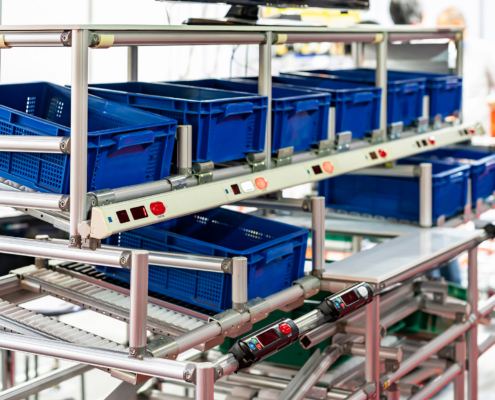
basket or plastic box container on roller rack or aluminum shelf with electronic display smart module system for management

How Pick Module System Installation Works: A Step-by-Step Guide for Distribution Centers

Pick Module
https://distributionxusa.com/wp-content/uploads/2026/06/basket-or-plastic-box-container-on-roller-rack-or-aluminum-shelf-with-electronic-display-smart-module-system-for-management.jpg 1250 2000 Abstrakt Marketing /wp-content/uploads/2024/02/Distribution-X-2023-Logo.png Abstrakt Marketing2026-06-29 14:22:382026-06-29 14:22:44How Pick Module System Installation Works: A Step-by-Step Guide for Distribution Centers

Categories

  • ASRS Installation
  • Automated Racking Installation Services
  • cold storage
  • Conveyor Installations
  • Conveyor Systems
  • Installation
  • Material Handling Installation
  • Mezzanines
  • Pallet Rack Installation
  • Pallet Racks
  • Pallet Shuttle Systems
  • Pick Module
  • Rack Supported Buildings
  • Vertical Lift Module
  • Warehouse Racking Installation

Contact Us

"*" indicates required fields

This field is for validation purposes and should be left unchanged.

About Us

Distribution X specializes in turnkey material handling system installations, catering to businesses across various industries throughout the United States.

Material Handling Installations

Automated System

Mechanical Conveyor

Pallet Rack & Steel Structure

Contact Us

770-212-3510

sales@distributionxusa.com

Website by Abstrakt Marketing Group ©
  • Privacy Policy
  • Sitemap
  • LinkedIn
  • YouTube
Scroll to top Scroll to top Scroll to top

This site uses cookies. By continuing to browse the site, you are agreeing to our use of cookies.

OKLearn more

Cookie and Privacy Settings


How we use cookies

We may request cookies to be set on your device. We use cookies to let us know when you visit our websites, how you interact with us, to enrich your user experience, and to customize your relationship with our website.

Click on the different category headings to find out more. You can also change some of your preferences. Note that blocking some types of cookies may impact your experience on our websites and the services we are able to offer.

Essential Website Cookies

These cookies are strictly necessary to provide you with services available through our website and to use some of its features.

Because these cookies are strictly necessary to deliver the website, refusing them will have impact how our site functions. You always can block or delete cookies by changing your browser settings and force blocking all cookies on this website. But this will always prompt you to accept/refuse cookies when revisiting our site.

We fully respect if you want to refuse cookies but to avoid asking you again and again kindly allow us to store a cookie for that. You are free to opt out any time or opt in for other cookies to get a better experience. If you refuse cookies we will remove all set cookies in our domain.

We provide you with a list of stored cookies on your computer in our domain so you can check what we stored. Due to security reasons we are not able to show or modify cookies from other domains. You can check these in your browser security settings.

Other external services

We also use different external services like Google Webfonts, Google Maps, and external Video providers. Since these providers may collect personal data like your IP address we allow you to block them here. Please be aware that this might heavily reduce the functionality and appearance of our site. Changes will take effect once you reload the page.

Google Webfont Settings:

Google Map Settings:

Google reCaptcha Settings:

Vimeo and Youtube video embeds:

Accept settingsHide notification only