• Click to Call
  • Request a Site Assessment
Distribution X
  • Material Handling Installation Solutions
    • Automated System Installations
          • AS / RS
          • Rack-Supported Buildings
          • Mini Load Systems
          • Wire Guidance Installation
          • Stacker Cranes
          • Pallet Load Systems
          • Automated Pallet Shuttles
          • Learn More
          • Vertical Lift Modules
          • Vertical Reciprocating Conveyors
          • Mobile Racking
    • Mechanical Conveyor Installations
          • Powered Conveyor
          • Gravity Conveyor
          • Conveyor Sortation Systems
          • Chain Conveyor
          • Robotic Picking System
          • Accumulation Conveyor
          • Learn More
          • Activated Roller Belt
          • AGVs & AMRs
          • Vertical Spiral Conveyor
    • Pallet Rack & Steel Structure Installations
          • Selective Rack
          • Drive-In Rack / Drive-Thru Rack
          • Push-Back Rack
          • Cantilever Rack
          • Double Deep Rack
          • Pallet Flow Rack
          • Learn More
          • Carton Flow Rack
          • Pick Module Systems
          • Mezzanines
    • Safety & Compliance
          • Learn More
    • Teardown & Decomission
          • Learn More
  • Projects
  • About Us
    • Blog
    • Careers
  • Contact
  • Menu Menu

How Pick Module System Installation Works: A Step-by-Step Guide for Distribution Centers

Most of the content that exists about pick modules was written by manufacturers and equipment dealers. It leads with spec sheets, flow diagrams, and product comparisons. What it almost never tells you is what the installation actually looks like from kickoff to go-live, what drives the timeline, and what separates a smooth project from a costly one. That’s the view from the installer’s side of the job, and it’s the view that matters most when you’re evaluating whether to move forward.
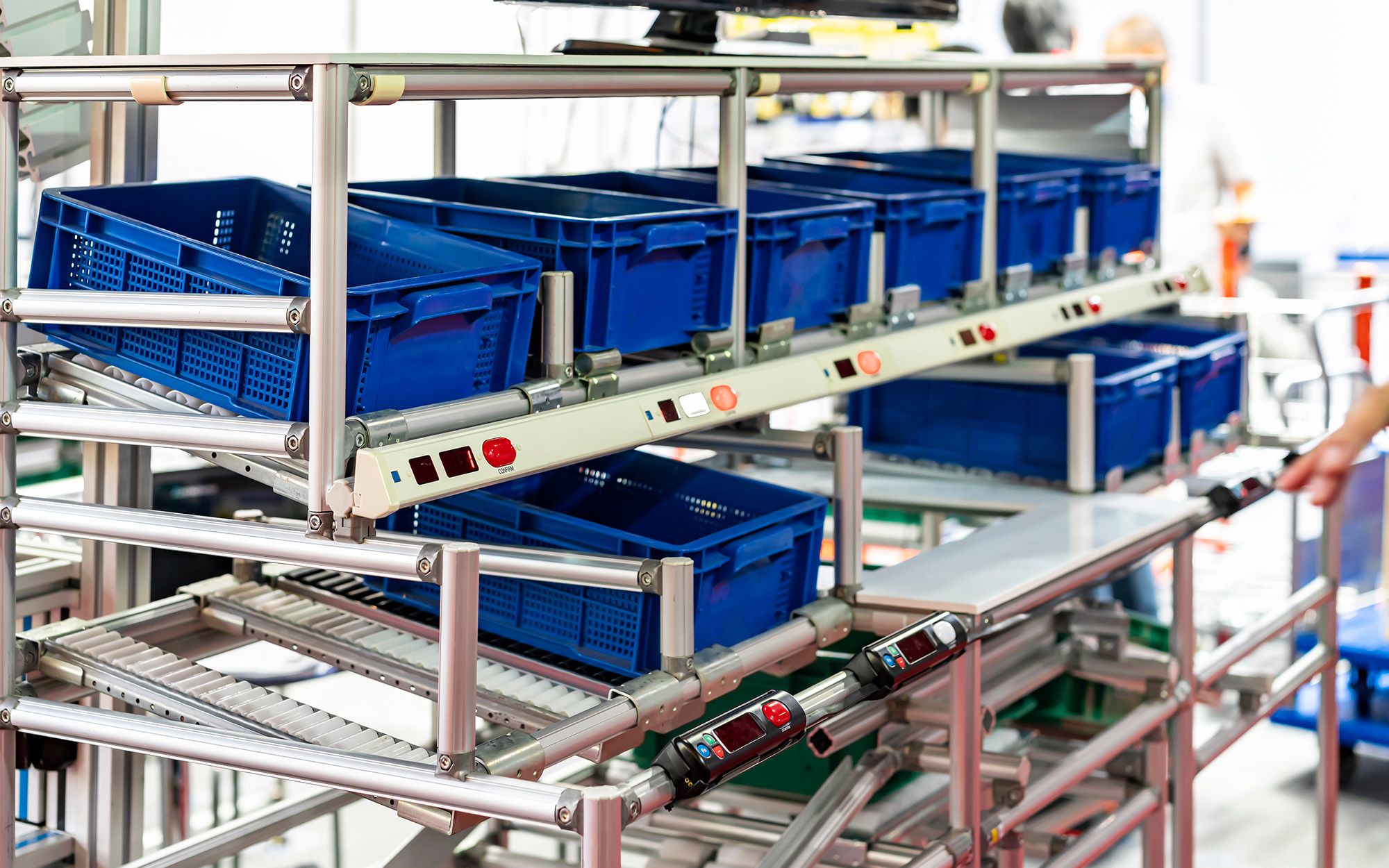
basket or plastic box container on roller rack or aluminum shelf with electronic display smart module system for management

What Is a Pick Module System, and How Is It Different From Standard Racking?

A pick module system is a multi-level, integrated order fulfillment structure built inside your warehouse. It combines structural racking and steel framing, elevated pick aisles with walking surfaces, conveyor lines for induction and takeaway, and storage media like carton flow rack or pallet flow rack into a single continuous pick path. The goal is to put a high volume of SKUs within reach of pickers across multiple levels, with conveyors moving orders through the system rather than pickers traveling across the floor to find them.

That is fundamentally different from a standard mezzanine or a few rows of selective racking. A mezzanine creates additional floor space. Selective racking stores pallets. A warehouse pick module is purpose-built to optimize order picking throughput, and it requires an installation process that reflects that complexity.

The Order-Picking System Installation Process, Step by Step

Step 1: Site Assessment and Structural Review

Before a single upright goes in the ground, a professional installer evaluates the facility. The most important and most commonly skipped step is the floor slab evaluation. A multi-level pick module system concentrates significant point loads on the warehouse floor, and confirming the slab can handle those loads is non-negotiable. Ceiling height is evaluated at the same time, since it determines how many levels are feasible and how the conveyor runs will be routed.

This is also the phase where the installer reviews dock door placement, column spacing, fire suppression coverage, and any existing infrastructure that could affect the layout. Skipping or rushing the site assessment is where projects run into costly problems later.

Step 2: Layout Design and Pick Path Planning

Once the site data is in hand, layout design begins. The installer and integrator work from your SKU velocity data, throughput requirements, and order profile to map out the pick path. Where are your fast movers going? How many levels does the system need? Where do conveyors induct and where do they take away? How are reserve storage and forward pick zones separated?

Pick path planning directly determines how efficient the finished system will be. A poorly planned pick path that forces backtracking or creates bottlenecks at conveyor merge points will underperform regardless of how well the physical installation is executed.

Step 3: Structural Steel and Racking Installation

The build always begins with structure. Upright frames, beams, and decking go in first, establishing the skeleton of the system. On a multi-level pick module system, this includes elevated walking surfaces, stairways, and any guard railing required for safety and OSHA compliance. The structural layer must be plumb, level, and fully anchored before anything else begins, because every subsequent component, the conveyors, the flow lanes, the automation, is aligned and mounted to it.

This is also where pallet rack installation for reserve storage areas, pick positions, and any carton flow or pallet flow lane integration happens. The sequence is deliberate: structure first, then the storage media that mounts to it.

Step 4: Conveyor Integration

With the structure complete and verified, conveyor installation begins. This phase covers induction conveyor at the start of the pick path, takeaway conveyor at each level, merge points where orders consolidate, and sortation conveyor at the end of the system. Conveyor runs are aligned to the structural steel, powered up level by level, and tested for proper tracking, speed, and merge sequencing before the next phase begins.

Conveyor alignment is not forgiving. Even a small level deviation can cause jams, misaligned scans, or sortation errors at full throughput. This is a phase where experienced installers earn their value.

Step 5: Automation Integration

On systems that include pick-to-light, voice picking, or barcode scan verification, the automation layer is integrated after the conveyors are running and verified. Controllers, light bars, and scanner mounts are installed at pick positions, cabling is routed, and the controls are connected to the conveyor PLC and the warehouse management system. The WMS integration layer is where many installations reveal their true complexity: the physical system has to communicate cleanly with your inventory and order management software before it can operate at speed.

Planning a pick module project? Distribution X installs turnkey systems for distribution centers nationwide, from structural build through commissioning, with no subcontractors and warranty-backed workmanship.

Explore Our Services

What Affects Pick Module Installation Timeline and Complexity

No two pick module installations are the same. The factors that most commonly affect timeline and scope are facility ceiling height, which determines the number of levels and structural complexity; floor slab condition and load capacity, which can require remediation before installation begins; SKU count and velocity profile, which drive the size and configuration of the pick path; whether the facility stays live during installation, which affects sequencing and safety planning; WMS and controls integration complexity, including the number of system interfaces and the readiness of your IT environment; and existing infrastructure like column locations, fire suppression layouts, and dock door positions that constrain where the system can go.

A professional installer will surface these variables early and build a realistic phased plan around them. If a low-bid installer is not asking these questions before quoting, that is a signal worth paying attention to.

How Pick Module Installation Works in a Live Distribution Center

The most common concern a DC manager has before a pick module project is the impact on daily operations. The honest answer is that a well-planned phased installation minimizes disruption, but it requires upfront coordination.

In a live-facility material handling installation, the work is sequenced in zones. A section of the floor is cleared and staged for structural work while adjacent operations continue. Temporary pick locations or overflow inventory positions are planned ahead of time to absorb the displaced SKUs. As each zone is completed and commissioned, operations migrate into the new system and the next zone opens.

The key to a successful phased build in a live facility is a detailed pre-installation coordination plan developed with the installer before work starts. This includes agreed-upon work windows (nights, weekends, or low-volume production periods), communication protocols between the install crew and warehouse supervisors, and clear criteria for when each zone is safe and ready to receive product.

Commissioning, Load Testing, and Operator Readiness

Installation complete does not mean ready to run. A warehouse pick module system requires a commissioning period before go-live. This includes test runs at production speed to verify conveyor tracking and merge behavior, load testing at peak volumes to confirm the structure and conveyors perform as designed, and pick path walk-throughs with the operations team to validate the layout against the actual order flow.

Operator training is the final and often undervalued phase. Pickers and supervisors need to understand the new flow, the safety protocols for elevated levels, how to respond to jams or faults, and how the system interfaces with the WMS. A system that is physically perfect but poorly introduced to the team will underperform in the first weeks of operation.

Distribution X treats commissioning and operator readiness as part of the installation, not an afterthought. The project is not finished until the system is running the way it was designed to run.

Work With a Turnkey Pick Module System Installer Who Knows the Full Process

Distribution X specializes in turnkey pick module system installations for distribution centers and warehouses across the United States. From the initial site assessment through structural build, conveyor integration, automation layering, and commissioning, our in-house team manages every phase of the project without subcontractors, keeping quality control and timelines firmly in our hands.

If you are evaluating a pick module project and want to talk through what the installation would look like for your facility, we are ready to have that conversation. Contact Distribution X to schedule a consultation.

Share This Post

  • Share on Facebook
  • Share on X
  • Share on WhatsApp
  • Share on Pinterest
  • Share on LinkedIn
  • Share on Tumblr
  • Share on Vk
  • Share on Reddit
  • Share by Mail

More Like This

The Complete Guide to Maximizing Warehouse Space With Expert Racking Installation 

Pallet Racks
https://distributionxusa.com/wp-content/uploads/2024/02/Pallet-Racks-in-Warehouse-During-Installation-Process.jpg 1250 2000 Abstrakt Marketing /wp-content/uploads/2024/02/Distribution-X-2023-Logo.png Abstrakt Marketing2025-02-18 14:09:312026-05-07 10:34:59The Complete Guide to Maximizing Warehouse Space With Expert Racking Installation 

Optimizing Space With Pallet Rack Installation

Pallet Racks
https://distributionxusa.com/wp-content/uploads/2024/04/Optimizing-Space-With-Pallet-Rack-Installation.jpg 1250 2000 Abstrakt Marketing /wp-content/uploads/2024/02/Distribution-X-2023-Logo.png Abstrakt Marketing2023-11-13 08:57:092026-05-07 10:35:02Optimizing Space With Pallet Rack Installation

Categories

  • ASRS Installation
  • Automated Racking Installation Services
  • cold storage
  • Conveyor Installations
  • Conveyor Systems
  • Material Handling Installation
  • Mezzanines
  • Pallet Rack Installation
  • Pallet Racks
  • Pallet Shuttle Systems
  • Pick Module
  • Rack Supported Buildings
  • Vertical Lift Module
  • Warehouse Racking Installation

Contact Us

"*" indicates required fields

This field is for validation purposes and should be left unchanged.

About Us

Distribution X specializes in turnkey material handling system installations, catering to businesses across various industries throughout the United States.

Material Handling Installations

Automated System

Mechanical Conveyor

Pallet Rack & Steel Structure

Contact Us

770-212-3510

sales@distributionxusa.com

Website by Abstrakt Marketing Group ©
  • Privacy Policy
  • Sitemap
  • LinkedIn
  • YouTube
Scroll to top Scroll to top Scroll to top

This site uses cookies. By continuing to browse the site, you are agreeing to our use of cookies.

OKLearn more

Cookie and Privacy Settings


How we use cookies

We may request cookies to be set on your device. We use cookies to let us know when you visit our websites, how you interact with us, to enrich your user experience, and to customize your relationship with our website.

Click on the different category headings to find out more. You can also change some of your preferences. Note that blocking some types of cookies may impact your experience on our websites and the services we are able to offer.

Essential Website Cookies

These cookies are strictly necessary to provide you with services available through our website and to use some of its features.

Because these cookies are strictly necessary to deliver the website, refusing them will have impact how our site functions. You always can block or delete cookies by changing your browser settings and force blocking all cookies on this website. But this will always prompt you to accept/refuse cookies when revisiting our site.

We fully respect if you want to refuse cookies but to avoid asking you again and again kindly allow us to store a cookie for that. You are free to opt out any time or opt in for other cookies to get a better experience. If you refuse cookies we will remove all set cookies in our domain.

We provide you with a list of stored cookies on your computer in our domain so you can check what we stored. Due to security reasons we are not able to show or modify cookies from other domains. You can check these in your browser security settings.

Other external services

We also use different external services like Google Webfonts, Google Maps, and external Video providers. Since these providers may collect personal data like your IP address we allow you to block them here. Please be aware that this might heavily reduce the functionality and appearance of our site. Changes will take effect once you reload the page.

Google Webfont Settings:

Google Map Settings:

Google reCaptcha Settings:

Vimeo and Youtube video embeds:

Accept settingsHide notification only